
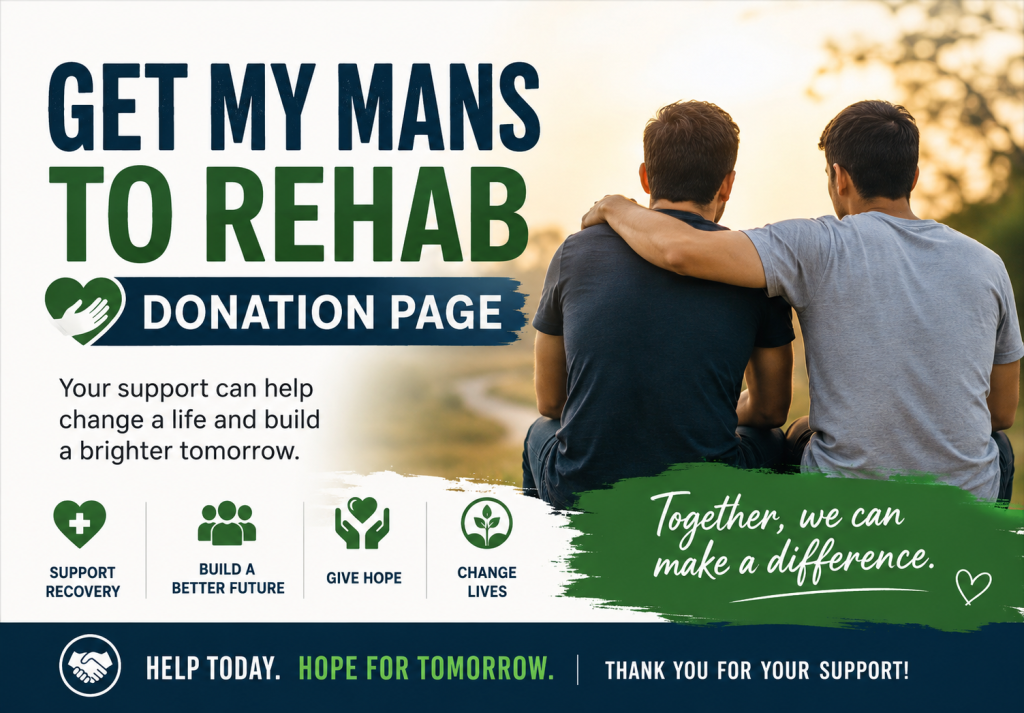
 Get My Mans to Rehab Donation Page
When someone you care about is struggling with substance use, finding the right support can feel overwhelming. Treatment can provide professional guidance, structure, and a safer path toward recovery, but the cost of rehabilitation may create another barrier for families who are already under stress.
The Get My Mans to Rehab Donation Page is designed to help raise financial support for rehabilitation and recovery-related needs. Donations can help make treatment more accessible for someone who needs professional care but may not have the financial resources to cover every expense.
Why Support Someone Going to Rehab?
Substance use can affect many areas of a person’s life, including education, employment, family relationships, physical health, and emotional wellbeing. Getting appropriate professional help can be an important step toward rebuilding stability.
However, entering a treatment program may involve expenses such as assessment, transportation, accommodation, counseling, medical services, and other recovery-related costs. For some families, these expenses can make an already difficult situation even harder.
A donation can provide practical financial assistance while also showing the person receiving treatment that people care about their wellbeing and future.
What Does a Rehab Donation Help With?
The specific use of donations depends on the treatment program and the individual’s circumstances. Financial support may contribute toward legitimate recovery-related expenses, including treatment fees, transportation, counseling, temporary accommodation, or other approved services.
Before donating, supporters should review the fundraising campaign carefully and understand how the organizer intends to use the funds.
Treatment and Recovery Expenses
Professional rehabilitation programs can involve different types of costs. Depending on the facility, treatment may include counseling, structured activities, educational programs, medical supervision, and ongoing recovery support.
Financial assistance can help reduce some of the pressure associated with accessing these services.
Transportation to Treatment
Getting to an appropriate treatment facility can sometimes be difficult, particularly when the facility is located outside the person’s local area. Donations may help with transportation costs when these expenses are part of the fundraising goal.
Continuing Recovery Support
Recovery does not necessarily end when an initial treatment program finishes. Continued counseling, support groups, follow-up appointments, and other professional services may be important parts of a person’s ongoing recovery plan.
How the Get My Mans to Rehab Donation Page Works
A donation campaign should clearly explain why financial support is needed, what the fundraising goal is, and how contributions are expected to help.
Supporters can review the campaign information and decide whether they would like to contribute. Even a small donation can help a fundraising campaign move closer to its goal.
Read the Campaign Information
Before making a contribution, take time to read the information provided by the fundraiser. Look for details about the treatment goal, fundraising target, intended use of donations, and the organization or individual responsible for the campaign.
Choose an Amount You Can Comfortably Give
There is no single amount that every supporter needs to donate. Giving should always be voluntary and should fit within your own financial circumstances.
A smaller contribution can still be meaningful when many people participate.
Share the Donation Campaign
If you cannot contribute financially, sharing a legitimate fundraising campaign with family members, friends, or community groups may also help increase its reach.
Why Every Donation Can Matter
Fundraising is often successful because many people contribute what they reasonably can. One person’s contribution may be modest, but multiple contributions can collectively make a meaningful difference.
Financial support can also reduce some of the practical obstacles surrounding treatment and allow families to focus more attention on supporting recovery.
The most important goal is helping someone connect with appropriate professional care and a supportive environment.
Supporting a Loved One Through Recovery
Supporting someone who needs rehabilitation can be emotionally difficult. Family members and friends may experience worry, frustration, confusion, or uncertainty about what to do next.
It is important to remember that rehabilitation should involve appropriate professionals who can assess the individual’s needs and recommend suitable treatment.
Encourage Professional Help
If someone is experiencing problematic substance use, encourage them to speak with a qualified healthcare or addiction professional. Professional assessment can help determine what type of support may be appropriate.
Avoid Judgment
Stigma can make it harder for people to seek assistance. Compassionate communication can help create an environment where someone feels more comfortable discussing their situation and considering professional treatment.
Respect Personal Boundaries
Supporting someone does not mean taking responsibility for every aspect of their recovery. Families and friends can offer encouragement while allowing qualified professionals to provide treatment guidance.
How to Make a Responsible Donation
When donating online, supporters should take reasonable steps to confirm that a fundraising campaign is legitimate.
Look for clear information about the campaign organizer, the purpose of the fundraiser, the intended recipient, and how funds will be used. If important information is unclear, consider asking the organizer for clarification before donating.
Verify the Fundraiser
Check whether the campaign provides consistent information about the person receiving support and the rehabilitation-related goal.
Understand Where the Money Goes
A responsible fundraising campaign should explain the intended purpose of the money raised. Donors should be able to make an informed decision based on the information provided.
Donate Through a Secure Platform
Use a reputable donation or fundraising platform and avoid sending money through suspicious links or requests for unnecessary personal information.
Can I Help Without Donating Money?
Absolutely. Financial donations are not the only way to support a recovery fundraiser.
Sharing a legitimate campaign can help it reach people who may be able to contribute. You can also offer appropriate emotional support, help someone communicate with their care team, or encourage them to seek professional assistance.
If you are helping a young person or someone who may be in immediate danger, involve a trusted adult or qualified professional rather than trying to manage the situation alone.
The Importance of Compassion During Recovery
Recovery can take time, and progress may not always happen in a straight line. A supportive environment can help reduce shame and encourage people to continue seeking appropriate assistance.
Friends and family can make a difference by listening, communicating respectfully, and encouraging professional care when needed.
At the same time, supporters should avoid making promises about recovery outcomes. Every person’s circumstances are different, and treatment plans should be developed with qualified professionals.
Frequently Asked Questions
What is the Get My Mans to Rehab Donation Page?
The Get My Mans to Rehab Donation Page refers to a fundraising page intended to collect financial contributions that can support someone seeking rehabilitation or recovery-related assistance.
Where does a rehab donation go?
The intended use depends on the individual fundraising campaign. Donations may be intended for treatment, transportation, counseling, accommodation, or other legitimate recovery-related expenses. Always review the specific campaign information before contributing.
Does a small donation make a difference?
Yes. Fundraising campaigns can benefit from contributions of different sizes. Donors should give only what they can comfortably afford.
Can I support the campaign without donating?
Yes. Sharing a legitimate fundraising campaign can help increase awareness and potentially connect the fundraiser with additional supporters.
Should I verify a donation page before contributing?
Yes. Review the campaign details, organizer information, fundraising purpose, and intended use of funds before making a contribution.
Is rehabilitation the same for everyone?
No. Treatment needs vary from person to person. A qualified healthcare or addiction professional can help determine appropriate support based on an individual’s circumstances.
Help Give Someone a Chance to Seek Professional Support
When a person needs rehabilitation, financial barriers should not be the only thing standing between them and appropriate professional care. A well-organized donation campaign can bring together friends, relatives, and community members who want to help.
If you are considering supporting a Get My Mans to Rehab Donation Page, review the campaign carefully, understand its purpose, and contribute only what you can reasonably afford. If you cannot donate, consider sharing a legitimate campaign with people who may be interested in helping.
Most importantly, remember that financial support works best alongside qualified professional care, compassionate encouragement, and a recovery plan suited to the individual’s needs.
Every responsible act of support can help create a more supportive environment for someone taking an important step toward recovery.
