
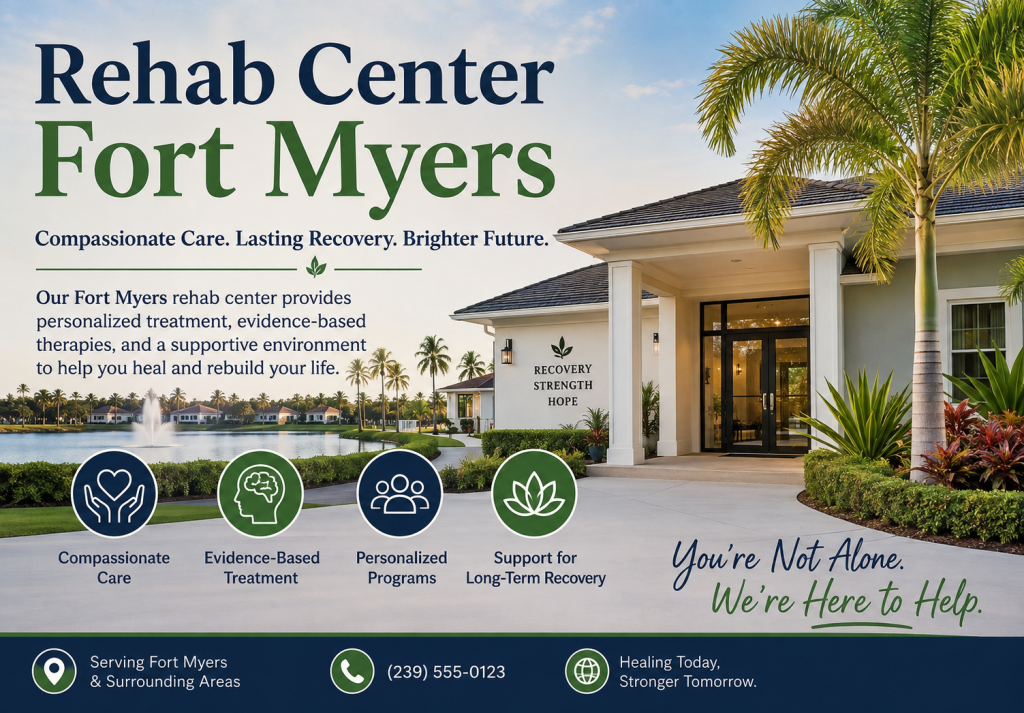
 Rehab Center Fort Myers: Find the Right Support for Recovery
Finding the right Rehab Center Fort Myers residents can trust is an important step toward building a healthier and more stable future. Whether someone is looking for support with substance use, behavioral health concerns, or a structured recovery program, choosing an appropriate rehabilitation center can make the recovery process more manageable.
A quality rehabilitation program should provide more than a temporary place to stay. Effective care focuses on the individual, addresses the factors contributing to addiction or unhealthy behaviors, and provides practical strategies for maintaining progress after treatment. For people in Fort Myers and surrounding communities, understanding what to look for in a rehabilitation center can make the decision easier.
What Is a Rehab Center?
A rehabilitation center is a specialized healthcare environment designed to help people overcome substance use disorders, behavioral health challenges, or other conditions that interfere with daily life. Depending on the individual’s needs, treatment may involve medical care, counseling, behavioral therapies, educational sessions, wellness activities, and continuing-care planning.
Rehabilitation programs can differ considerably. Some provide residential treatment, while others offer outpatient services that allow individuals to continue living at home while attending scheduled treatment sessions.
The right level of care depends on factors such as the person’s condition, treatment history, support system, safety considerations, and recovery goals.
Why Choose a Rehab Center in Fort Myers?
Choosing a Rehab Center Fort Myers location can provide several practical advantages for individuals and families in Southwest Florida. Being relatively close to home may make it easier for loved ones to remain involved in appropriate parts of the recovery process.
Fort Myers also offers access to a variety of healthcare and community resources. When selecting a rehabilitation provider, however, location should be only one consideration. The quality and suitability of the treatment program are equally important.
A convenient location can be particularly helpful for outpatient treatment because regular appointments may be required over an extended period.
Types of Rehabilitation Programs in Fort Myers
Different people require different levels of treatment. A reputable rehabilitation provider should evaluate an individual’s needs before recommending a particular program.
Residential Rehabilitation
Residential rehabilitation provides a structured environment where individuals can receive treatment while living at the facility. This type of program may be appropriate for people who need greater separation from triggers, distractions, or environments associated with substance use.
Residential treatment may include counseling, behavioral therapy, educational activities, wellness programs, and recovery planning.
Outpatient Rehabilitation
Outpatient treatment allows individuals to remain at home while participating in scheduled treatment. Depending on the program, appointments may occur several times per week or according to an individualized schedule.
Outpatient care can be useful for people who have a stable living environment and do not require continuous residential supervision.
Intensive Outpatient Programs
An intensive outpatient program, often called an IOP, provides more structured treatment than traditional outpatient care while allowing participants to live outside the treatment facility.
Programs can include group counseling, individual therapy, educational sessions, relapse-prevention strategies, and other supportive services.
Partial Hospitalization Programs
Partial hospitalization programs offer a higher level of structured treatment without requiring overnight residence in the facility. Participants generally spend a significant portion of the day receiving treatment before returning to an appropriate living environment.
The suitability of this type of program should be determined through a professional assessment.
What to Look for in a Rehab Center
Choosing a rehabilitation provider is an important decision. Before selecting a Rehab Center Fort Myers families can rely on, consider several factors.
Individualized Treatment
Recovery is not identical for everyone. A strong treatment program should consider a person’s history, current circumstances, goals, and specific needs rather than using exactly the same approach for every client.
Individualized treatment can help ensure that services are relevant to the person’s situation.
Qualified Professionals
Ask about the qualifications and experience of the professionals providing care. Depending on the services offered, a treatment team may include physicians, therapists, counselors, nurses, behavioral health professionals, and other specialists.
Evidence-Based Approaches
Ask what therapeutic approaches the center uses and whether those approaches are supported by established research. Treatment should be based on recognized clinical principles and adapted to the individual’s needs.
Continuity of Care
Recovery does not necessarily end when a formal treatment program is completed. A good rehabilitation plan should consider what happens next.
Continuing care may include outpatient counseling, support groups, follow-up appointments, recovery planning, or referrals to other appropriate services.
Family Involvement
Family support can be valuable during recovery. Depending on the program and the individual’s circumstances, family education or counseling may help loved ones understand recovery and learn healthier ways to provide support.
Safe and Supportive Environment
The treatment environment should be respectful, professional, and focused on recovery. Individuals should feel that their concerns can be discussed without unnecessary judgment.
What Happens During Rehabilitation?
The rehabilitation process varies from one person to another, but many programs follow several general stages.
Initial Assessment
Treatment commonly begins with an assessment. Professionals may review the individual’s substance use history, physical and behavioral health, previous treatment experiences, family circumstances, and recovery goals.
The purpose is to determine what type and intensity of care may be appropriate.
Personalized Treatment Planning
Following the assessment, the treatment team can develop an individualized plan. This may identify specific goals, therapies, services, and follow-up needs.
Treatment plans can also change as progress is made.
Counseling and Behavioral Therapy
Counseling is often an important component of rehabilitation. Individual counseling provides an opportunity to discuss personal challenges privately, while group sessions can provide peer support and opportunities to develop communication and coping skills.
Behavioral approaches may help individuals recognize patterns that contribute to unhealthy behaviors and develop healthier responses.
Recovery Education
Education can help individuals understand addiction, behavioral health, triggers, coping strategies, communication, and relapse prevention.
Learning how recovery works can make it easier to recognize potential challenges and respond to them constructively.
Aftercare Planning
A treatment program should ideally prepare individuals for life after formal rehabilitation. An aftercare plan may identify ongoing counseling, community resources, support networks, or other appropriate services.
Benefits of Professional Rehabilitation
Trying to overcome a serious substance use or behavioral health problem without appropriate support can be difficult. Professional rehabilitation provides structure and access to trained professionals who can help individuals work toward recovery.
Potential benefits may include:
- A structured recovery environment
- Professional assessment and guidance
- Individual and group counseling
- Development of healthier coping strategies
- Education about recovery and behavioral patterns
- Support with creating realistic recovery goals
- Relapse-prevention planning
- Connections to continuing-care resources
- Support for rebuilding healthy routines
Treatment does not guarantee a particular outcome, and recovery can involve setbacks. However, professional support can provide valuable tools and resources throughout the process.
How to Choose the Best Rehab Center Fort Myers Residents Need
Searching online for a Rehab Center Fort Myers provider can produce many options. Instead of choosing based only on advertisements or rankings, take time to evaluate the services offered.
Start by identifying the type of care needed. Determine whether residential, outpatient, intensive outpatient, or another level of treatment may be appropriate.
Next, review the center’s treatment approach. Look for clear information about the professionals involved, therapies offered, treatment duration, and continuing-care services.
It is also helpful to ask questions before enrolling. Consider asking:
- What level of care is available?
- Is an assessment required before treatment?
- What types of therapy are provided?
- Are treatment plans individualized?
- What qualifications do the clinical professionals have?
- How is progress monitored?
- Is family participation available?
- What happens after the treatment program ends?
- Are services appropriate for the individual’s specific needs?
Clear answers can help families make a more informed decision.
When Should Someone Consider Rehabilitation?
Recognizing when professional help may be appropriate is not always easy. Substance use or behavioral health concerns may begin gradually and become more disruptive over time.
Professional evaluation may be worth considering when substance use or related behaviors begin interfering with school, work, relationships, responsibilities, finances, or general well-being.
Other warning signs can include repeated unsuccessful attempts to stop or reduce harmful behavior, increasing dependence on a substance or behavior, withdrawal from supportive relationships, or continued problems despite negative consequences.
A professional assessment can help determine whether rehabilitation is appropriate and what level of support may be needed.
Support for Long-Term Recovery
Successful recovery involves more than completing a treatment program. Developing healthy routines and maintaining supportive connections can be important parts of long-term progress.
After treatment, individuals may benefit from continuing counseling, peer-support communities, healthy recreational activities, stable routines, and positive relationships.
Relapse or setbacks can occur during recovery and should be treated as an indication that additional support or adjustments to the recovery plan may be needed rather than as a reason to abandon treatment.
Why Personalized Care Matters
Every recovery journey is different. Age, history, environment, family circumstances, previous treatment, and personal goals can all influence what type of care is appropriate.
For this reason, a Rehab Center Fort Myers provider should focus on understanding the individual rather than simply placing everyone into the same treatment model.
Personalized care can help make treatment goals clearer and allow professionals to adjust services as circumstances change.
Start Exploring Rehab Options in Fort Myers
Choosing rehabilitation is a significant decision, but individuals and families do not have to navigate the process without information. Understanding available levels of care, treatment approaches, professional qualifications, and continuing-care options can make the search more manageable.
If you are searching for a Rehab Center Fort Myers option, begin by identifying the type of support needed and comparing providers based on their services, treatment philosophy, professional team, and approach to individualized care.
The right rehabilitation program should provide a safe, respectful, and structured environment where individuals can work toward meaningful recovery goals. With appropriate professional support and a well-planned continuum of care, recovery can become a step-by-step process focused on healthier choices, stronger coping skills, and improved quality of life.
Frequently Asked Questions About Rehab Centers in Fort Myers
How do I choose a rehab center in Fort Myers?
Look at the level of care, treatment services, professional qualifications, individualized treatment planning, location, and continuing-care options. It is also important to confirm that the program is appropriate for the individual’s specific circumstances.
How long does rehab treatment take?
Treatment length varies depending on the person’s needs and the type of program. Some people participate in shorter programs, while others require longer-term or continuing care. A professional assessment can help determine an appropriate treatment plan.
Is outpatient rehab available in Fort Myers?
Many rehabilitation providers offer outpatient services. Outpatient treatment allows eligible individuals to receive professional support while continuing to live outside the treatment facility.
Can family members participate in rehabilitation?
Some programs offer family education, counseling, or other forms of family involvement. Availability depends on the provider and the individual’s treatment plan.
What happens after rehab?
Aftercare can include ongoing counseling, support groups, follow-up services, community resources, and relapse-prevention planning. Continuing support can help individuals maintain the skills developed during treatment.
Is rehabilitation only for substance addiction?
No. Rehabilitation services can address different substance use and behavioral health needs. The appropriate program depends on the individual’s circumstances and professional assessment.
Take the Next Step Toward Recovery
Finding a suitable Rehab Center Fort Myers residents can access is an important part of beginning the recovery journey. The best choice is not necessarily the program with the most advertising or the largest facility. Instead, look for professional care, individualized treatment, appropriate levels of support, and a clear plan for continuing recovery.
If you or someone you care about is struggling, consider speaking with a qualified healthcare or behavioral health professional about available treatment options. Getting an assessment can be a practical first step toward understanding what kind of support may be appropriate.
